
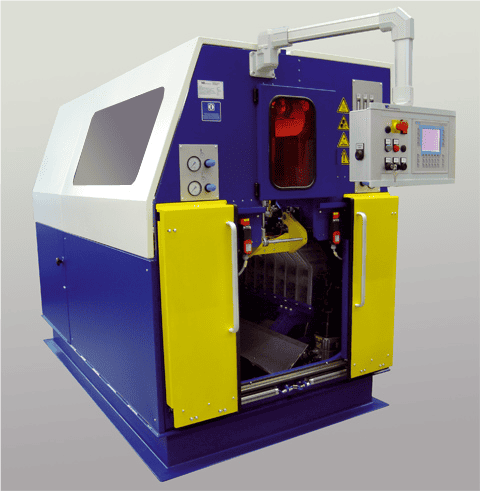
I have spent most of my life around spinning lathes and weld booths, so I do not say this lightly: the day we committed to laser welded cylinders was one of the bigger turning points in this shop’s recent history. We had been rolling and welding cylinders since the early 2000s, and for years our TIG process did honest work. But honest work and efficient work are not always the same thing, and somewhere along the way the math stopped adding up the way I wanted it to.
Why We Walked Away From TIG
Here is the plain truth. As our order volumes climbed, our TIG welding became the bottleneck. We invested in a decoiler and an automatic TIG welding machine back in 2007, then added two more TIG machines after that. The quality held up, I will give it that. But the process was labor-intensive in a way that wore on people. High-volume orders were something the crew dreaded rather than welcomed, and when your best folks start eyeing the schedule with that look, you pay attention.
So we went looking for automation. We landed on laser technology and partnered with Weil Technology, ultimately bringing in their Flexmaster system to optimize both cost and capacity. I will be honest, switching a core process is not a decision you make on a whim. But once we saw what automated laser welding could do for our welded cylinders, the case made itself.
The Numbers Behind Laser Welded Cylinders
 Let me give you the figure that matters most. Compared to our former TIG process, we are seeing a 60 percent reduction in cylinder production time. That is not a typo and it is not marketing fluff. According to the case study Weil Technology published on our partnership, that is exactly what happened on our floor with our move to laser welded cylinders.
But the time savings, as big as they are, are only half the story. The work itself got dramatically less strenuous. The way I put it to Weil was that the Flexmaster reduced not just weld time but the elbow grease. Our employees are now excited to run the machine instead of dreading the high-volume orders that used to grind them down. When a piece of equipment changes the mood on the floor, you know you made the right call.
Three Things That Got Better
Beyond raw speed, the quality gains from automated laser welding surprised even me. First, no more planishing. The laser welds we produce match the parent material thickness, which eliminates the downstream smoothing step that used to eat our time. Second, superior roundness. Weil’s sling-and-belt system stabilizes the cylinder all the way through the weld, so the parts come out rounder than we ever achieved before. Third, better forming performance. That thinner, cleaner weld seam has shortened our spin forming times and cut our failure rates.
There is a knock-on benefit I did not fully appreciate until we were in production. We had invested in a new fiber laser three years earlier, and those high-quality blanks pair perfectly with our laser welded cylinders. Having a rounder cylinder that is truer to the model means our 3D laser cutting, when we trim or cut features into finished formed parts, matches the designed part far more closely. Everything downstream gets easier when the cylinder starts out right, and that is the quiet advantage of laser welded cylinders that does not show up in any single spec sheet.
What This Means For Our Customers
If you are an OEM buyer weighing where to place a cylinder job, here is what laser welded cylinders translate to for you: shorter lead times, tighter roundness tolerances, fewer rejects, and parts that hold true to your drawings. Automated laser welding is not about chasing the newest toy on the market. It is about delivering you a better part, more predictably, at a price that makes sense. That is the only reason we invest in any technology around here, and it is why laser welded cylinders earned a permanent place in our process.
A Word About Metal Spinning
For all the laser talk, metal spinning is still the heart of what we do. It is one of the oldest metal forming methods around, a process where a disc or tube of metal is rotated at high speed and shaped against a tool to form a seamless, axis-symmetric part. Done right, it produces strong, clean, repeatable components, and it pairs beautifully with the cylinder work and laser welding we have been talking about. The two disciplines feed each other.
That blend is the whole point of this company. We have specialized in precision metal spinning, laser cutting, and custom metal fabrication for OEMs across a wide range of industries, and our commitment to that mix is exactly what lets us keep delivering dependable, American-made parts you can build on.
Please contact us with questions or for a quote on your next spun part. We do invite you to engage with us on social media (just not for immediate needs). Best to call, email or visit our site for the best response.
As always, if you like, you will find us on the following social media sites, among many others:
Facebook
LinkedIn
X (formerly Twitter)
The post When TIG Gave Way to Laser Welded Cylinders: A Faster, Rounder Way to Build appeared first on Church Metal.
from Church Metal https://ift.tt/d4SNt5q
